
Sealing the Arduino in a NEMA box protects from dust but traps heat from the linear regulator and W5100 chip. Probes in a separate ventilated housing need holes for ambient air while keeping rain off. Confusing the two enclosure types causes overheated Ethernet resets and sluggish humidity readings—different problems with similar “boxed up” appearance.
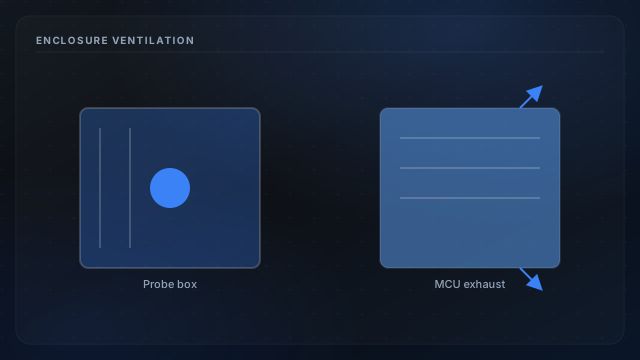
MCU box guidelines
- Louvers or slots on opposing sides for cross-flow.
- Keep barrel jack and RJ45 accessible for service.
- Do not seal Ethernet shield against a hot south wall without shade.
Probe box guidelines
Match probe mounting: vents sized for air exchange, cable gland pointing down, sensor not in direct sun patch. Interior MCU heat must not share an unvented cavity with a DHT22—see zone layout.
Thermal interaction
Warm electronics raise nearby air if co-mounted—mount probes on exterior wall, MCU near the router run. Ground planning still applies inside the box.