
Parking a warm car in a closed garage after a drive dumps sensible heat into the air volume and warms nearby surfaces. Probes mounted on the same wall as the vehicle or above the hood can read high for one to three hours while the rest of the bay returns toward outdoor-influenced temps. This is real physics, not miscalibration.
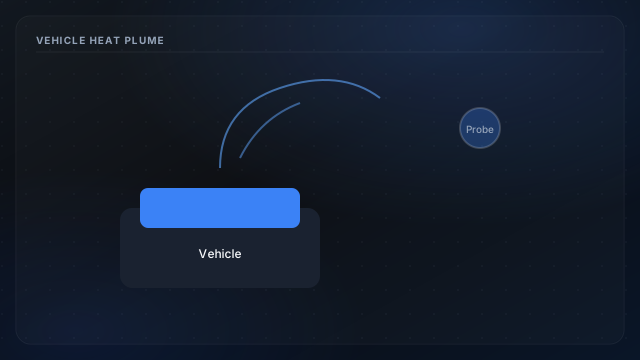
Typical timeline
- First 30 minutes: Largest air-temperature bump near the vehicle.
- 1–3 hours: Gradual decay; metal hood still radiates after air mixes.
- Overnight: Vehicle equilibrates; probes should match seasonal baselines.
Separating from other drivers
Door openings cause **sharp simultaneous** zone moves; vehicle heat is **localized**—only nearby probes spike. Sun load peaks in afternoon without tying to arrival times. Log arrival times when using CSV export for forensic charts.
Placement guidance
Mount a reference probe on the opposite wall from habitual parking via probe mounting. Avoid hanging sensors directly above engine bays if you need stable overnight freeze metrics.