
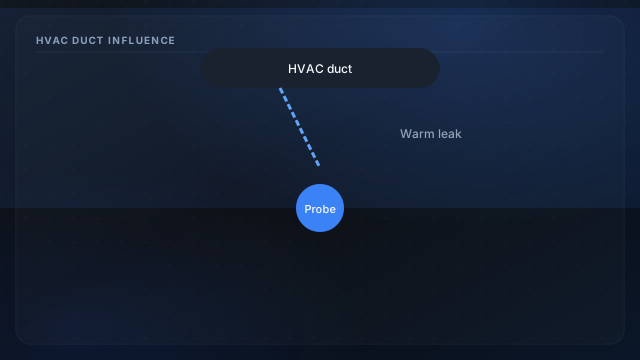
Some garages share a wall, ceiling, or chase with conditioned house ductwork. Even sealed runs radiate heat in winter; poorly sealed taps leak warm air into an otherwise cold bay. Probes near registers or flex duct can swing several degrees independently of the door or outdoor temperature—patterns that look like sensor faults until you map the HVAC path.
Signatures in data
Sudden rises when the house furnace cycles—especially at night with the garage door closed—suggest duct influence. Compare against door-driven swings, which align with human activity instead of 15-minute HVAC periods.
Mapping zones
- Place one probe away from known duct chases as a reference.
- Note cycle times in a spreadsheet alongside exported history.
- Relabel mappings in dashboard labels after moves so history stays interpretable.
Mitigation and monitoring
Sealing duct joints is a building fix; monitoring is still valuable to confirm improvement. Use multi-zone layout and freeze thresholds on the coldest zone, not the duct-warmed corner.